

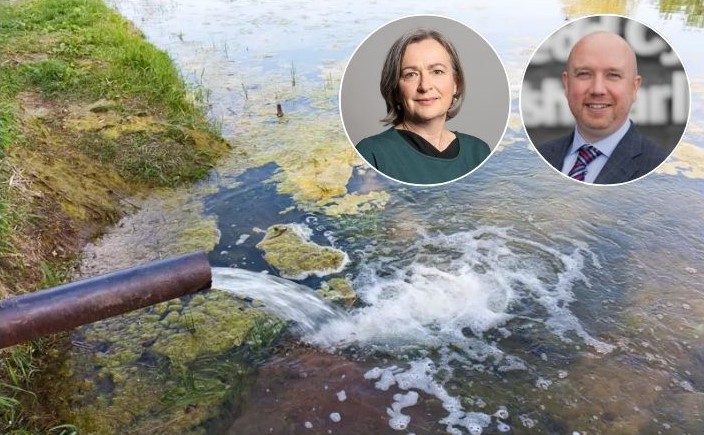
Plaid Cymru MP Liz Saville Roberts and MS Mabon ap Gwynfor have again called on Dŵr Cymru to redouble efforts to prevent the discharge of sewage into waterways in Gwynedd as reports of sewage dumping continue.
Figures show there were 118,276 sewage discharges in Wales in 2024 with Dwyfor Meirionnydd reporting 10,578 discharges lasting around 88,682 hours across 175 sites.
Both Mrs Saville Roberts and Mr ap Gwynfor have repeatedly raised the issue with Dŵr Cymru urging the not-for-profit company to act or risk damaging the good name of those communities affected.
But concerns continue to mount about the frequency of sewage discharges into waterways across Gwynedd, with communities such as Tywyn, Cricieth, Fairbourne, and Pwllheli reporting recurring issues.
Mrs Saville Roberts and Mr ap Gwynfor have warned that more must now be done to reduce and prevent sewage discharges into local waterways including better communication with the public and have urged Dŵr Cymru to engage proactively with local communities and campaign groups.
Commenting, Liz Saville Roberts MP and Mabon ap Gwynfor MS said:
The pollution of our seas, beaches, rivers, and lakes not only threatens our health but our well-being and sense of local pride. It also has a detrimental impact on the Gwynedd visitor economy and on water-based leisure activities.
We continue to receive regular correspondence from constituents, concerned about the frequent discharging of sewage into our local waterways and the adverse impact this is having on the health of our communities.
It shows the level of the concern locally if people are prepared to write to their elected representatives about this issue on a regular basis.
We share these concerns and the wider public perception that these bodies of water are not safe to use.
Our constituency relies heavily on tourism, particularly coastal communities such as Pwllheli, Tywyn and Cricieth.
It is disheartening therefore to be told time and again that sewage is being discharged into these areas, causing palpable concern locally.
It should be appreciated that many of those who use our rivers, lakes and seas for recreational purposes rely on apps for water quality information.
We would urge Dŵr Cymru to redouble their efforts in working with these platforms to ensure accurate, real-time data is used to inform users of water quality.
Above all else, all effort must be taken to mitigate the ongoing situation which neither the health of our communities, the visitor economy or Dŵr Cymru can ill-afford.